Give up learning, and put an end to your troubles.
Is there a difference between yes and no?
Is there a difference between good and evil?
Must I fear what others fear?
What nonsence!
Other people are contented, enjoying the sacrificial feast of the ox.
In spring some go to the park, and climb the terrace, but I alone am drifting not knowing where I am.
Like a new-born babe before it learns to smile, I am alone, without a place to go.
Others have more than they need, but I alone have nothing.
I am a fool.
Oh, yes!
I am confused.
Other men are clear and bright, but I alone am dim and weak.
Other men are sharp and clever, but I alone am dull and stupid.
Oh, I drift like the waves of the sea.
Without direction, like the restless wind.
Everyone else is busy, but I alone am aimless and depressed.
I am different.
I am nourished by the great mother.
Friday, March 17, 2006

Thursday, March 16, 2006
raga of the day----kanakAngi
Aarohana:S R1 G1 M1 P D1 N1 S
Avarohana:S N1 D1 P M1 G1 R1 S
Kanakangaka---Koteeswara Iyer
Sri hapustrayanamosthuthe----Balamurali krishna
Srigananatham---Thyagaraja
Dasarathapala----Pallavi Sesha Iyer
Avarohana:S N1 D1 P M1 G1 R1 S
Kanakangaka---Koteeswara Iyer
Sri hapustrayanamosthuthe----Balamurali krishna
Srigananatham---Thyagaraja
Dasarathapala----Pallavi Sesha Iyer
Tao-19
Give up sainthood, renounce wisdom, and it will be a hundred times better for everyone.
Give up kindness, renounce morality, and men will rediscover filial piety and love.
Give up ingenuity, renounce profit, and bandits and thieves will disappear.
These three are outward forms alone;
they are not sufficient in themselves.
It is more important to see the simplicity, to realise one's true nature, to cast off selfishness and temper desire.
Give up kindness, renounce morality, and men will rediscover filial piety and love.
Give up ingenuity, renounce profit, and bandits and thieves will disappear.
These three are outward forms alone;
they are not sufficient in themselves.
It is more important to see the simplicity, to realise one's true nature, to cast off selfishness and temper desire.
Wednesday, March 15, 2006
Q & A with K.Balachander.
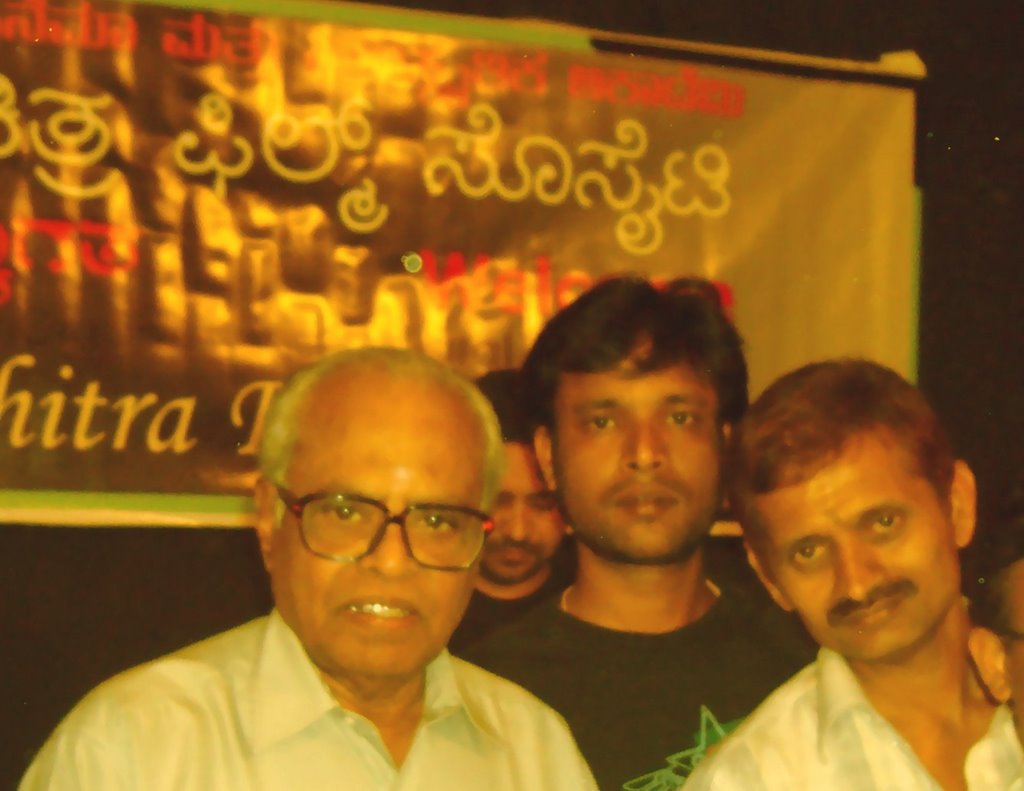
Q) When Kannada filmmakers like Girish Kasaravalli and Malayalam Directors like Adoor Gopala Krishnan are making films with a conviction and seriousness towards film as an art form, why is it that most Tamil film makers, who are not less talented, are making films using a middle path to the so called safe formula of 'not too commercial not too serious and artistic? What is your opinion about this being a director who followed the same path?
A) The answer for such a long question is actually very simple. It’s like that and if I have to add anything, unfortunately, it’s like that. But honestly I am quite happy that I am considered as one among those who took this middle path instead of being an extremist.
Q) Many of your films deal with the social issues, especially, of women. These issue-based films, in the view of the producer, are a huge risk to make as they usually turn out to be failures at the box office. What is your opinion of these producers who put in money to make more money?
A) For those producers who are afraid to take risks they will always find filmmakers who are ready to make commercial formula films. When such films are enjoyable to the viewers it will never be a problem for anybody; everyone is safe, the producer, the director and the viewer except for one thing that is the art itself.
Q) How can one become a filmmaker like you?
A) Whatever I am today is because I worked with 100% conviction all through my life. So, if you are aspiring to be like me I suggest you to deal with art, especially filmmaking, with 100% sincerity, hard work and conviction.
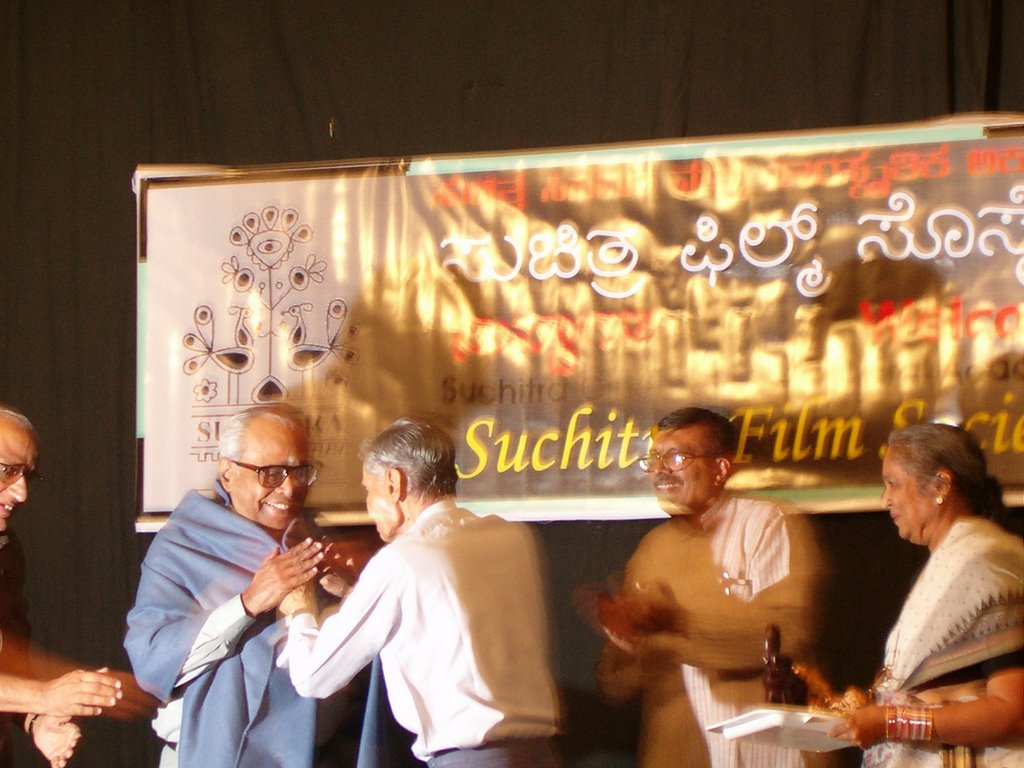
Q) Some shots from your award winning film "Thaneer Thaneer" are similar to the shots from Akira Kurasawa's Ikiru and Godard's Breathless. Is it a possibility that while making Thaneer Thaneer these two film makers and the mentioned films, in particular, would have had an influence on your creative process? Or was it just a coincidence?
A) I have surely watched the films mentioned but I am not really sure if I watched these films prior to the making of "Thaneer Thaneer". I have always been a fond admirer of Akira Kurasawa and his films. If you are accusing (smiles) me of copying the shots from the films of Akira Kurasawa, the master of the art, I say, I am honored that my films carry a reflection of the art of one of the greatest filmmakers of the world.
Q) A scene in Thaneer Thaneer shows two illiterates carrying a newspaper to a man who can read. In this scene the actors’ placement is such that the literate person is seen sitting on an elevated position (on top of a hut) while the two illiterates stand below the hut. While shooting this scene, was that your intention to portray symbolically that a person who is literate will stand above the rest of his illiterate community? Or, like it happens many a times is it a figment of imagination aroused out of the mind of a serious viewer out of an admiration towards the director as an artist?
A) First of all, I feel elated that there are viewers who watch films with such sincerity and I feel so happy that after 26 years of making this film there are unnoticed details that are brought to my notice. As a director I really had no intention to portray that symbolism but today I feel that the symbolism is right and just. It might have been the idea of the cinematographer or some other member of the crew. I am happy that such fine detail of the film is pointed out now.
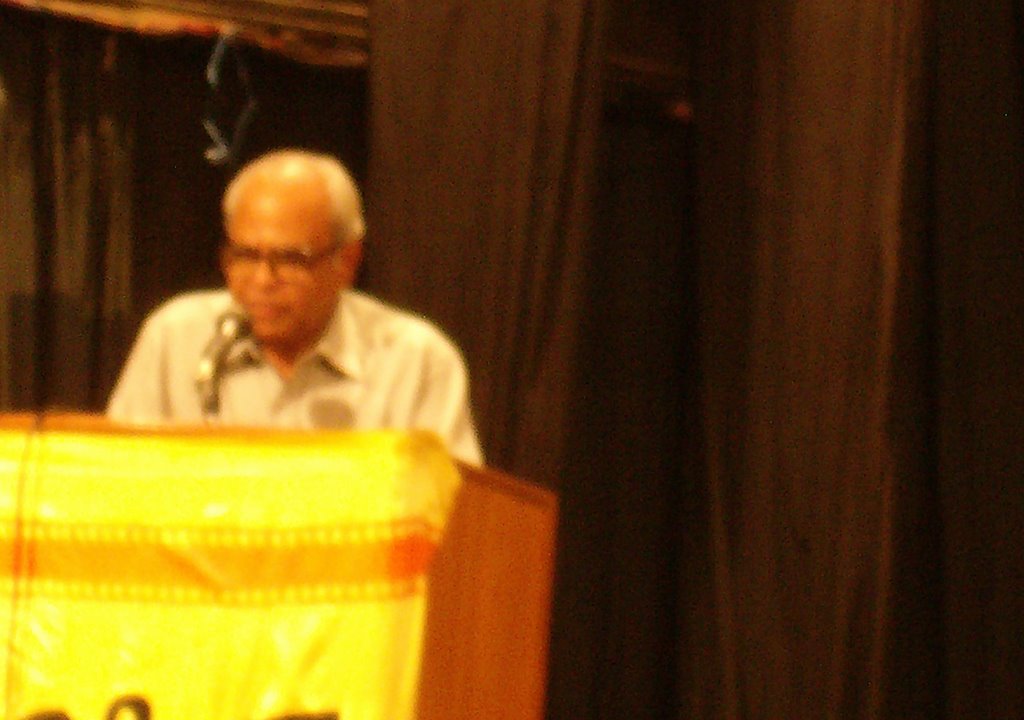
Q) Today, if one would like to watch Satyajit Ray's Pather Panchali or Gurudutt's Pyaasa or for that matter any good Indian film form the past all we get is a poor quality CD or DVD with no subtitles, tarnished image and poor quality sound. That’s true with your films too. Don’t you think that it’s your responsibility as a filmmaker to restore and preserve the films from the past?
A) I totally agree with that point and the concern towards preserving the masterpieces from the past. But sadly the state of affairs of our film industry is very bad. Somebody has to do something about it.
Q) In concern with the previous question, don't you think that it’s your responsibility as a filmmaker to restore and preserve the films that you made as a director and producer? If so what are you doing towards it?
A) I am seriously concerned with the fact that the films from the past are to be restored and preserved for the future generations. But sadly I am just a part of the system. My film "Thaneer Thaneer", sadly' has no existing copy of the negative of the film. The producers who made this film are no more and it makes things even more difficult and impossible. But I am working towards it and I want to stress on the point that it’s high time that everyone in the film industry realized the importance of preserving the films.
Q) Why is it that most of your films deal with the issues of women?
A) May be because I love woman. I like woman and their issues.
Q) You have stated in many interviews that you consider Puttanna Kanagal (Kannada filmmaker), thought younger than you, as your guru in filmmaking. What is it that you learnt from him?
A) Age has got nothing to do with learning. You can learn from anybody and everybody. I liked and admired Puttana Kanagal, because, at the time when many of our filmmakers lacked the vision of filmmaking in terms of visuals he was the one who insisted on films being visual than oral. Apart from that his ability to churn out the human emotions from his actors was one of his kind.
Q) Your film, "Thaneer Thaneer" deals with the same issue, "State against her own people", like the recent film "Rang De Basanti". In both the films the general public or the so-called masses resort to violence in the end and the state fights against her own people. Even after 25 years of your film and almost 60 years of Indian independence do you think that there is no other alternative than taking up gun as a means of liberation?
A) If there were an alternative, people would have come up with that alternative. As there is no other suggestion, for me, history will repeat itself and people will always fight against state or, to be more specific, against the irresponsibility of the state and its measures.
Q) What was the influence of Russian films on you?
A) Quite honestly I haven't watched more than 2 or 3 Russian films.
Q) Long back you were seen in a role different than you are. You were seen in the role of an actor. Why is it that you haven't explored that facet of your life as an actor?
A) I have been an actor from the time I remember. As a director I act out and perform every role from my films. Yes I haven't shown myself on screen much, except from very few roles. I have acted in a minor but a significant role in my forth-coming Tamil film due to be released on April 14th. I hope you will enjoy watching me on screen as much as you enjoyed me behind the screen.
Q) After making waves with your TV serials people thought that you stopped making films. Now you are seen again concentrating on filmmaking. What made you shift back to filmmaking?
A) For me, both film and TV are visual mediums to portray and depict my thoughts and ideas. But my career as TV serial maker made me realize that my thought process is narrowing down. This realization made me to come back into films. I wish to make films with the same conviction.
Q) Of all the films you made what is your favorite film?
A) This is the most common question put to me. This was and is a very difficult question to answer. But I personally feel that "Punnagai", a Tamil film with Gemini Ganeshan and Nagesh in it, is one of the best films I ever made. In that film, I was really able to voice out my opinion and I was able to say something through that film. Sadly, that film did not farewell at the box office and I was not surprised because when I made Thaneer Thaneer I never expected it to be a commercial success. The film "Thaneer Thaneer" which dealt with acute water problems of a drought-ridden village of Tamilnadu was released on the Diwali day of 1981 and that day Tamilnadu witnessed one of a severe rainfall of those days. The distributors of that film were very much disturbed with the rain and of course the fate of the film. But as I believed that one-day's rain of cats and dogs was not the ultimate truth and the truth was far more than that unexpected rain. The people of Tamilnadu were able and ready to perceive and understand the same truth. That was the same reason, I believe, that made this so called art film a major commercial success.
Read more about K Balachander here . The Balachander Story
Tao-18
When the great Tao is forgotten, kindness and morality arise.
When wisdom and intelligence are born, the great pretence begins.
When there is no peace within the family, filial piety and devotion arise.
When the country is confused and in chaos, loyal ministers appear.
When wisdom and intelligence are born, the great pretence begins.
When there is no peace within the family, filial piety and devotion arise.
When the country is confused and in chaos, loyal ministers appear.
raga of the day----bilahari
Aarohanam: S R 2 G3 P D2 S
Avarohanam: S N3 D2 P M1 G3 R2 S
Dorakuna Ituvamti Seva---Tyagaraja
Inta Kanna---Tyagaraja
Kanbadeppodu---Ambuja Krishna
Saranu Janakana----Purandara Dasa
Vanthathuvum Ponathuvum----Oothukkadu Venkatasubbier
Avarohanam: S N3 D2 P M1 G3 R2 S
Dorakuna Ituvamti Seva---Tyagaraja
Inta Kanna---Tyagaraja
Kanbadeppodu---Ambuja Krishna
Saranu Janakana----Purandara Dasa
Vanthathuvum Ponathuvum----Oothukkadu Venkatasubbier
Maximum City-Bombay lost & found.
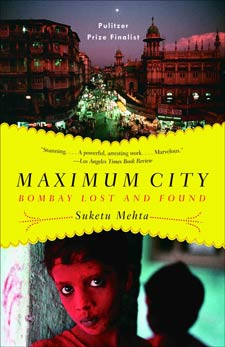
This book by Suketu Mehta is gripping and makes a compulsive read. This non fictional account of the author's love affair with the city of Mumbai is travel writing at its best.
Excerpt:
There will soon be more people living in the city of Bombay than on the continent of Australia. Urbs Prima in Indis reads the plaque outside the Gateway of India. It is also the Urbs Prima in Mundis, at least in one area, the first test of the vitality of a city: the number of people living in it. With 14 million people, Bombay is the biggest city on the planet of a race of city dwellers. Bombay is the future of urban civilization on the planet. God help us.
I left Bombay in 1977 and came back twenty-one years later, when it had grown up to become Mumbai. Twenty-one years: enough time for a human being to be born, get an education, be eligible to drink, get married, drive, vote, go to war, and kill a man. In all that time, I hadn’t lost my accent. I speak like a Bombay boy; it is how I am identified in Kanpur and Kansas. “Where’re you from?” Searching for an answer—in Paris, in London, in Manhattan—I always fall back on “Bombay.” Somewhere, buried beneath the wreck of its current condition—one of urban catastrophe—is the city that has a tight claim on my heart, a beautiful city by the sea, an island-state of hope in a very old country. I went back to look for that city with a simple question: Can you go home again? In the looking, I found the cities within me.
I am a city boy. I was born in a city in extremis, Calcutta. Then I moved to Bombay and lived there nine years. Then to New York, eight years in Jackson Heights. A year, on and off, in Paris. Five years in the East Village. Scattered over time, another year or so in London. The only exceptions were three years in Iowa City, not a city at all, and a couple more in New Brunswick, New Jersey, college towns that prepared me for a return to the city. My two sons were born in a great city, New York. I live in cities by choice, and I’m pretty sure I will die in a city. I don’t know what to do in the country, though I like it well enough on weekends.
I come from a family of mercantile wanderers. My paternal grandfather left rural Gujarat for Calcutta in the salad days of the century, to join his brother in the jewelry business. When my grandfather’s brother first ventured into international territory, to Japan, in the 1930s, he had to come back and bow in apology before the caste elders, turban in his hands. But his nephews—my father and my uncle—kept moving, first to Bombay and then across the black water to Antwerp and New York, to add to what was given to them. My maternal grandfather left Gujarat for Kenya as a young man, and he now lives in London. My mother was born in Nairobi, went to college in Bombay, and now lives in New York. In my family, picking up and going to another country to live was never a matter for intense deliberation. You went where your business took you.
Once, with my grandfather, I went back to our ancestral house in Maudha, which used to be a village in Gujarat but is now a town. Sitting in the courtyard of the old house with its massive timbers, my grandfather began introducing us to the new owners, a family of Sarafs, Gujarati moneylenders, for whom Maudha was the big city. “And this is my son-in-law, who lives in Nigeria.”
“Nigeria,” said the Saraf, nodding.
“And this is my grandson, who is from New York.”
“New York,” the Saraf repeated, still nodding.
“And this is my granddaughter-in-law, who is from London.”
“London.”
“Now they both live in Paris.”
“Paris,” the Saraf dutifully recited. If at this point my grandfather had said he lived on the moon, the Saraf would, without batting an eyelid, have kept nodding and repeated, “Moon.” Our dispersal was so extreme that it bordered on the farcical. But here we were, visiting the house where my grandfather grew up, still together as a family. Family was the elastic that pulled us back together, no matter how far we wandered.
* * *
It was the muqabla, the commercial competition, that had forced my father to leave Calcutta. It was the way jewels were bought and sold in my grandfather’s business. A group of sellers would assemble at the buyer’s office with the broker at an appointed time. Then the negotiations would begin. The price was not said aloud but was indicated by the number of fingers held up under a loose corner of the seller’s dhoti, which would be grasped by the buyer. Part of the muqabla was loud abuse of the buyer. “Have you gone mad? Do you expect me to sell at these prices?” In a display of extreme frustration, the seller would storm out of the office, shouting loudly all the time. But he would be careful to forget his umbrella. Ten minutes later he would be back, to pick up the umbrella. By this time the buyer might have reconsidered and they might come to a conclusion, at which point the broker would say, “Then shake hands!” and there would be smiles all around. It was because of this little piece of theater that my father decided to leave the jewelry business in Calcutta. He could not stand the shouting and the abuse; he was an educated man.
My father’s brother had gone to Bombay in 1966, against the will of my grandfather, who saw no reason why he should leave. But my uncle was a young man, and the twilight in Calcutta had begun. In Bombay, he went into the diamond business. Three years later, my parents were passing through Bombay, after my little sister was born in Ahmadabad. My uncle, recently married, suggested to his brother, “Why don’t you stay?” So we did, four adults and two children, one a newborn, in a one-room flat, with guests always coming and going. We lived as a “joint family,” sharing the flat and the expenses, and the space expanded to fit us. How can 14 million people fit onto one island? As we did in that apartment off Teen Batti.
My father and my uncle found their niche in the diamond business. We moved to a two-bedroom flat above a palace by the sea, Dariya Mahal. The palace belonged to the Maharao of Kutch. A family of Marwari industrialists bought the palace and its grounds; they chopped down the trees on the land, cleared the antiques out of the palace, and put in schoolchildren. Around the palace they built a complex of three buildings: Dariya Mahal 1 and 2, twenty-story buildings that look like open ledgers, and Dariya Mahal 3, where I grew up, the squat, stolid, twelve-story stepchild.
My uncle and my father made regular business trips to Antwerp and America. When my father asked what he could bring back from America for me, I asked him for a scratch-and-sniff T-shirt, which I’d read about in some American magazine. He came back bringing a giant bag of marshmallows. I ate as many as I could of the huge white cottony things, and tried to make sense of the texture, before my aunt appropriated them. After one of those trips, according to my uncle, my father had an epiphany while shaving, as often happens when you’re facing yourself in a mirror without actively looking. He decided to move to America. Not for its freedom or its way of life; he moved there to make more money.
Each person’s life is dominated by a central event, which shapes and distorts everything that comes after it and, in retrospect, everything that came before. For me, it was going to live in America at the age of fourteen. It’s a difficult age at which to change countries. You haven’t quite finished growing up where you were and you’re never well in your skin in the one you’re moving to. I had absolutely no idea about the country America; I had never been there. I was certainly not of a later generation of my cousins, such as Sameer, who at the age of sixteen, stepped into JFK Airport fresh off the plane from Bombay wearing a Mets baseball cap and with half an American accent already in place. I traveled, in twenty-four hours, between childhood and adulthood, between innocence and knowledge, between predestination and chaos.
Everything that has happened since, every minute and monstrous act—the way I use a fork, the way I make love, my choice of a profession and a wife—has been shaped by that central event, that fulcrum of time.
There was a stack of Reader’s Digests in the back room of my grandfather’s Calcutta house, dark, hot, womblike. There, in my summers, I had read true-life adventures, spy stories of the dastardly Communists, and jokes the whole family could enjoy about the antics of children and servicemen. It was my introduction to America. Imagine my surprise when I got there. I was lucky, though I didn’t know it then, that of all the possible cities my father could have moved us to, he chose New York. “It’s just like Bombay.” Thus is New York explained to people in India.
In the first year after I got to America I sent for its previously inaccessible treasures, the merchandise advertised on the inside covers of the comic books. I ordered, for my friends in Bombay, the joy buzzer, the floating ghost, the hovercraft, and X-ray goggles. A brown box came in the mail. I looked at it for a few moments before opening it; here was what we had been denied all these years. Then the junk came spilling out. The floating ghost was a white plastic garbage-bin liner with a stick threaded through the top; you were supposed to hang it up and wave it around to scare people. The X-ray goggles were a pair of plastic glasses, like the 3-D glasses given out in science-fiction theaters, with a rough drawing of a skeleton on both lenses. The hovercraft was a sort of red fan, attached to a motor; when you turned it on, it really did rise over a flat surface. The joy buzzer was a small steel device that could be worn on the inside of the palm like a ring; you wound it up and when you shook the victim’s hand a knob was pressed and the device vibrated sharply. I looked at the mess spread out on the floor. I had been had before in Bombay; I knew the feeling well.
Nonetheless, I sent the package to my Bombay friends, with a letter suggesting possible uses for the gags; the ghost, for instance, could be lowered on a string to flap outside the balconies of the lower floors, possibly scaring small children in the dark.
I knew my gifts would be welcome. Whatever their quality, they were “imported” and therefore to be treasured. In our house in Bombay, there used to be a showcase in the living room. It displayed imported objects from Europe and America, the spoils of my uncle’s business trips: Matchbox cars, miniature bottles of spirits, a cylinder of long matches from London shaped like a Beefeater with a furry black hat as the top, a little model of the Eiffel Tower. There were toys, also, for the children—a battery-powered Apollo 11 rocket, a police cruiser with a blue revolving light, a doll that could drink and wet her diaper—which were almost never taken out for us. The kids in the building would assemble around the showcase and look up at the toys inside—toys we weren’t allowed to touch for fear of breaking them.
In America, too, we had a showcase in our house. In it were kept souvenirs from India: a pair of grandparent dolls, Dada dressed in a dhoti, Dadi in a cotton sari; a marble statue of Ganesh; a wooden mask of Hanuman; a little model of the Taj Mahal with a light that glowed from within; a bharata natyam dancer whose head moved sideways on her neck; and a bronze clock shaped like the official map of India with all of Kashmir reclaimed from the Pakistanis and the Chinese. When the new baby was born he wasn’t allowed to open the showcase and play with these objects. They were too fragile; he would hurt himself. He spent his time splayed against the glass door of the showcase, staring at his heritage, like a wasp at a window.
When I moved to New York, I missed Bombay like an organ of my body. I thought that when I left Bombay I had escaped from the worst school in the world. I was wrong. The all-boys Catholic school I went to in Queens was worse. It was in a working-class white enclave that was steadily being encroached upon by immigrants from darker countries. I was one of the first minorities to enroll, a representative of all they were trying to hold out against. Soon after I got there, a boy with curly red hair and freckles came up to my lunch table and announced, “Lincoln should never have freed the slaves.” The teachers called me a pagan. My school yearbook photo shows me looking at the camera with the caption, “It’s so strong I can even skip a day,” referring to an advertising slogan for a brand of antiperspirant. This was how the school saw me: as a stinking heathen, emitting the foul odors of my native cooking. On the day I graduated, I walked outside the barbed-wire-topped gates, put my lips to the pavement, and kissed the ground in gratitude.
In Jackson Heights we reapproximated Bombay, my best friend Ashish and I. Ashish had also been moved from Bombay to Queens, at the age of fifteen. The happiest afternoons of that time were when we went to see Hindi movies at the Eagle Theater. With one letter changed, it had formerly been the Earle Theater, a porn house. The same screen that had been filled with monstrous penises pullulating in mutant vaginas was now displaying mythologicals of the blue-skinned god Krishna; in these films not a breast, not even a kiss was shown. Maybe it was being purified. But I still scanned the seats carefully before sitting down on them.
Monday, March 13, 2006

Raga of the day----Sama
Aarohanam: S R21 P D2 S
Avarohanam: S D2 P M1 G3 R2 S
Manasa Sancharare---Sadashiva Brahmendra
Annapoorne---Muthuswami Dikshitar
Shantamulekha---Tyagaraja
Guruguaya Bhaktanugrahaya---Muthuswami Dikshitar
Avarohanam: S D2 P M1 G3 R2 S
Manasa Sancharare---Sadashiva Brahmendra
Annapoorne---Muthuswami Dikshitar
Shantamulekha---Tyagaraja
Guruguaya Bhaktanugrahaya---Muthuswami Dikshitar
Tao-17
The very highest is barely known by men.
Then comes that which they know and love, then that which is feared, then that which is despised.
He who does not trust enough will not be trusted.
When actions are performed without unnecessary speech, people say, "We did it!"
Then comes that which they know and love, then that which is feared, then that which is despised.
He who does not trust enough will not be trusted.
When actions are performed without unnecessary speech, people say, "We did it!"

Friday, March 10, 2006
I regret
I regret for not having watched Mani Shankar's Tango Charlie. After the debacle of his second film 'Rudraksh', I decided not to watch Tango Charlie. But only today I read the review of it and I feel sorry for being so biased and for ignoring the film. I would definitely watch it in the coming future for what it is but not how it is, as it is a proven fact that the film is bad.
What impresses me is the idea of the film. It is the story of a soldier told through four different tales of four different wars he fought. Again, the novelty of the idea is in chosing the wars. These wars are not the much screened Indo-Pak wars but the day to day internal wars fought with in ourselves, the war with the Naxals, the war with Bodo etc....
Read the review for more info.
Tango Charlie Review:
Coutesy.
http://www.radiosargam.com/movies/moviereviews/t/tangocharlie.htm
BACKGROUND:
The film is based on the director’s thought process which says that Western Europe and the US haven’t fought a war on its soil for the last 60 years because they have always exported their wars to other poorer nations and made them fight. The director also feels that some part of the world is always at war, keeping their armaments industry bulging with profits. And whenever an Indian or Pakistani or Iraqi or Palestinian or Afghan soldier dies, someone in Europe or the US makes a buck. That’s the rip-off economics of war. The result is a film called Tango Charlie, which has a different take than any other war film. Hence Mani Shankar calls his film an anti-war film.
SYNOPSIS:
The film is not about war between two nations, but about the small skirmishes that take place in a country like in any civil war. But here, the emphasis is on this young man Tarun Chauhan alias Tango Charlie (Bobby Deol). Deol has been found on the border – injured. Vikram Rathore (Sanjay Dutt) and Shezaad Khan (Sunil Shetty) locate him in the mountains and then they read his diary which tells them four fascinating tales that Tarun Chauhan has been a part of many wars from the Bodo insurgency in the north east of India which has many victims, to the Kargil conflict which is the most picturised war scene in Bollywood in the past few years and films.
The sory in the first war is about BSF Battalion 101 where he is working with Hawaldar Mohammed Ali (Ajay Devgan), who is the guru of Tarun Chauhan. A Chinese insurgent soldier (Kelly Dorjee) is instigating local Bodos in their war and sponsors their war against the government. Tarun is taught how to fight with such an enemy by Hawalar Mohammed Ali. The sex based jokes shared by the armymen among other things add a lot of fun to this story here.
Chauhan turns out to be a soldier who does not believe in fighting. Unlike in Ab Tumhare Hawale Watan Saathiyon where he wants a life of comfort, Bobby Deol believes in peace. He does not like to kill anyone at all. However he does not mind lifting up the gun to protect his fellow countrymen unlike the soldier Dev Anand played in Prem Pujari of the pacifist soldier who is was court-martialed for not firing at the enemy.
The Deccan plateau in Maharashtra and Karnataka has been witnessing few stories of naxalite attacks. How civilians are made a scapegoat in this fight is the narrative of the second tale.
The fights on the homefront with local hoodlums that was shown in the war film Prahaar also takes place in this film as well – Ajay Devgan replacing Anan Patekar in a similar tale with Devgan in Bengal.
The fourth story is about the Kargil conflict and that’s where the story is set in the climax. By the way, Mohamed Ali has a love interest and so does Tarun. But they don’t really matter to the story.
CRITIQUE:
The film terraces the walk of the foot soldier. It is not the story of the top armymen. Bollywood stars have mostly played senior officers in the defence forces. Tango Charlie changes that. The film emphasizes on the thought that war is brutal and terrifying. It reduces us to our most inhuman and cruel selves. The shuttling between different stories tells us that India is burning all around its borders. Each day several Indian soldiers die in a war of attrition in many theatres of conflicts.
The director has tried to say that hush descends in every street of Srinagar and the fear is so thick you can cut it with a knife.
If these thoughts are true, they should have been part of a documentary film and not a feature film. The film unwittingly is camouflaged like the hero in the attire of a war film.
There are two love stories and two music directors in the film in the form of Anu Malik and Anand Raaj Anand. Both of them could have been shot down like enemies before the war or rather the film had not started. These commercial elements thus impacted the growth of the film into what could have been a powerful docudrama at least. The film thus does not remain true to its thought that songs are not a part of a war film.
Ajay Devgan excels in his performance and so does Bobby. The women are wasted. Kelly Dorjee makes a decent debut. I am waiting to see him work with girlfriend Lara Dutta soon. It is these performances and the thought behind the film that sets it apart.
CONCLUSION:
Tango Charlie needed a better name to have some commercial chances. Many have not even understood the name of the film.
Reviewed by: Tony
+++++++++++++++++++++
Trivia:
Question:What's Mani Shankar up to these days?
Answer: was last seen making a short film on YS Rajasekhar Reddy on the eve of Bush's visit to Hyderabad.
What impresses me is the idea of the film. It is the story of a soldier told through four different tales of four different wars he fought. Again, the novelty of the idea is in chosing the wars. These wars are not the much screened Indo-Pak wars but the day to day internal wars fought with in ourselves, the war with the Naxals, the war with Bodo etc....
Read the review for more info.
Tango Charlie Review:
Coutesy.
http://www.radiosargam.com/movies/moviereviews/t/tangocharlie.htm
BACKGROUND:
The film is based on the director’s thought process which says that Western Europe and the US haven’t fought a war on its soil for the last 60 years because they have always exported their wars to other poorer nations and made them fight. The director also feels that some part of the world is always at war, keeping their armaments industry bulging with profits. And whenever an Indian or Pakistani or Iraqi or Palestinian or Afghan soldier dies, someone in Europe or the US makes a buck. That’s the rip-off economics of war. The result is a film called Tango Charlie, which has a different take than any other war film. Hence Mani Shankar calls his film an anti-war film.
SYNOPSIS:
The film is not about war between two nations, but about the small skirmishes that take place in a country like in any civil war. But here, the emphasis is on this young man Tarun Chauhan alias Tango Charlie (Bobby Deol). Deol has been found on the border – injured. Vikram Rathore (Sanjay Dutt) and Shezaad Khan (Sunil Shetty) locate him in the mountains and then they read his diary which tells them four fascinating tales that Tarun Chauhan has been a part of many wars from the Bodo insurgency in the north east of India which has many victims, to the Kargil conflict which is the most picturised war scene in Bollywood in the past few years and films.
The sory in the first war is about BSF Battalion 101 where he is working with Hawaldar Mohammed Ali (Ajay Devgan), who is the guru of Tarun Chauhan. A Chinese insurgent soldier (Kelly Dorjee) is instigating local Bodos in their war and sponsors their war against the government. Tarun is taught how to fight with such an enemy by Hawalar Mohammed Ali. The sex based jokes shared by the armymen among other things add a lot of fun to this story here.
Chauhan turns out to be a soldier who does not believe in fighting. Unlike in Ab Tumhare Hawale Watan Saathiyon where he wants a life of comfort, Bobby Deol believes in peace. He does not like to kill anyone at all. However he does not mind lifting up the gun to protect his fellow countrymen unlike the soldier Dev Anand played in Prem Pujari of the pacifist soldier who is was court-martialed for not firing at the enemy.
The Deccan plateau in Maharashtra and Karnataka has been witnessing few stories of naxalite attacks. How civilians are made a scapegoat in this fight is the narrative of the second tale.
The fights on the homefront with local hoodlums that was shown in the war film Prahaar also takes place in this film as well – Ajay Devgan replacing Anan Patekar in a similar tale with Devgan in Bengal.
The fourth story is about the Kargil conflict and that’s where the story is set in the climax. By the way, Mohamed Ali has a love interest and so does Tarun. But they don’t really matter to the story.
CRITIQUE:
The film terraces the walk of the foot soldier. It is not the story of the top armymen. Bollywood stars have mostly played senior officers in the defence forces. Tango Charlie changes that. The film emphasizes on the thought that war is brutal and terrifying. It reduces us to our most inhuman and cruel selves. The shuttling between different stories tells us that India is burning all around its borders. Each day several Indian soldiers die in a war of attrition in many theatres of conflicts.
The director has tried to say that hush descends in every street of Srinagar and the fear is so thick you can cut it with a knife.
If these thoughts are true, they should have been part of a documentary film and not a feature film. The film unwittingly is camouflaged like the hero in the attire of a war film.
There are two love stories and two music directors in the film in the form of Anu Malik and Anand Raaj Anand. Both of them could have been shot down like enemies before the war or rather the film had not started. These commercial elements thus impacted the growth of the film into what could have been a powerful docudrama at least. The film thus does not remain true to its thought that songs are not a part of a war film.
Ajay Devgan excels in his performance and so does Bobby. The women are wasted. Kelly Dorjee makes a decent debut. I am waiting to see him work with girlfriend Lara Dutta soon. It is these performances and the thought behind the film that sets it apart.
CONCLUSION:
Tango Charlie needed a better name to have some commercial chances. Many have not even understood the name of the film.
Reviewed by: Tony
+++++++++++++++++++++
Trivia:
Question:What's Mani Shankar up to these days?
Answer: was last seen making a short film on YS Rajasekhar Reddy on the eve of Bush's visit to Hyderabad.
Short term goals
1)Finish writing the novel by April 15th
2)Finish reading "The Wretched of the Earth" by Frantz Fanon
3)Finish writing the script by the end of July
4)Finish reading "The Hunted" by Mudra Rakshasha
5)Finish Finish Finish Finish
An Extract from "The Wretched of the Earth"
Not so very long ago, the earth numbered two thousand million inhabitants: five hundred million men, and one thousand five hundred million natives. The former had the Word; the others had the use of it. Between the two there were hired kinglets, overlords, and a bourgeoisie, sham from beginning to end, which served as go-betweens. In the colonies the truth stood naked, but the citizens of the mother country preferred it with clothes on: the native had to love them, something in the way mothers are loved. The European elite undertook to manufacture a native elite. They picked out promising adolescents; they branded them, as with a red-hot iron, with the principles of Western culture; they stuffed their mouths full with high-sounding phrases, grand glutinous words that stuck to the teeth. After a short stay in the mother country they were sent home, whitewashed. These walking lies had nothing left to say to their brothers; they only echoed. From Paris, from London, from Amsterdam we would utter the words "Parthenon! Brotherhood!" and somewhere in Africa or Asia lips would open "...thenon! ...therhood!" It was the golden age.
It came to an end; the mouths opened by themselves; the yellow and black voices still spoke of our humanism but only to reproach us with our inhumanity. We listened without displeasure to these polite statements of resentment, at first with proud amazement. What? They are able to talk by themselves? Just look at what we have made of them! We did not doubt but that they would accept our ideals, since they accused us of not being faithful to them. Then, indeed, Europe could believe in her mission; she had hellenized the Asians; she had created a new breed, the Greco-Latin Negroes. We might add, quite between ourselves, as men of the world: "After all, let them bawl their heads off, it relieves their feelings; dogs that bark don't bite."
2)Finish reading "The Wretched of the Earth" by Frantz Fanon
3)Finish writing the script by the end of July
4)Finish reading "The Hunted" by Mudra Rakshasha
5)Finish Finish Finish Finish
An Extract from "The Wretched of the Earth"
Not so very long ago, the earth numbered two thousand million inhabitants: five hundred million men, and one thousand five hundred million natives. The former had the Word; the others had the use of it. Between the two there were hired kinglets, overlords, and a bourgeoisie, sham from beginning to end, which served as go-betweens. In the colonies the truth stood naked, but the citizens of the mother country preferred it with clothes on: the native had to love them, something in the way mothers are loved. The European elite undertook to manufacture a native elite. They picked out promising adolescents; they branded them, as with a red-hot iron, with the principles of Western culture; they stuffed their mouths full with high-sounding phrases, grand glutinous words that stuck to the teeth. After a short stay in the mother country they were sent home, whitewashed. These walking lies had nothing left to say to their brothers; they only echoed. From Paris, from London, from Amsterdam we would utter the words "Parthenon! Brotherhood!" and somewhere in Africa or Asia lips would open "...thenon! ...therhood!" It was the golden age.
It came to an end; the mouths opened by themselves; the yellow and black voices still spoke of our humanism but only to reproach us with our inhumanity. We listened without displeasure to these polite statements of resentment, at first with proud amazement. What? They are able to talk by themselves? Just look at what we have made of them! We did not doubt but that they would accept our ideals, since they accused us of not being faithful to them. Then, indeed, Europe could believe in her mission; she had hellenized the Asians; she had created a new breed, the Greco-Latin Negroes. We might add, quite between ourselves, as men of the world: "After all, let them bawl their heads off, it relieves their feelings; dogs that bark don't bite."

Tao-16
Empty yourself of everything.
Let the mind rest at peace.
The ten thousand things rise and fall while the Self watches their return.
They grow and flourish and then return to the source.
Returning to the source is stillness, which is the way of nature.
The way of nature is unchanging.
Knowing constancy is insight.
Not knowing constancy leads to disaster.
Knowing constancy, the mind is open.
With an open mind, you will be openhearted.
Being openhearted, you will act royally.
Being royal, you will attain the divine.
Being divine, you will be at one with the Tao.
Being at one with the Tao is eternal.
And though the body dies, the Tao will never pass away.
Let the mind rest at peace.
The ten thousand things rise and fall while the Self watches their return.
They grow and flourish and then return to the source.
Returning to the source is stillness, which is the way of nature.
The way of nature is unchanging.
Knowing constancy is insight.
Not knowing constancy leads to disaster.
Knowing constancy, the mind is open.
With an open mind, you will be openhearted.
Being openhearted, you will act royally.
Being royal, you will attain the divine.
Being divine, you will be at one with the Tao.
Being at one with the Tao is eternal.
And though the body dies, the Tao will never pass away.
raga of the day----saveri
Arohana:S R1 M1 P D1 S
Avarohana:S N3 D1 PM1 G3 R1 S
Balamu Kulamu---Tyagaraja
Anjaneya Raghurama---Swati Tirunaal
Durusugaa Kripaa---Syama Sastry
Venkataramanane Baro---Purandara Dasa
Deenudanenu Devudavu Neevu---Annamayya
Sriraja Gopala---Muthuswami Dikshitar
Avarohana:S N3 D1 PM1 G3 R1 S
Balamu Kulamu---Tyagaraja
Anjaneya Raghurama---Swati Tirunaal
Durusugaa Kripaa---Syama Sastry
Venkataramanane Baro---Purandara Dasa
Deenudanenu Devudavu Neevu---Annamayya
Sriraja Gopala---Muthuswami Dikshitar
Subscribe to:
Posts (Atom)
